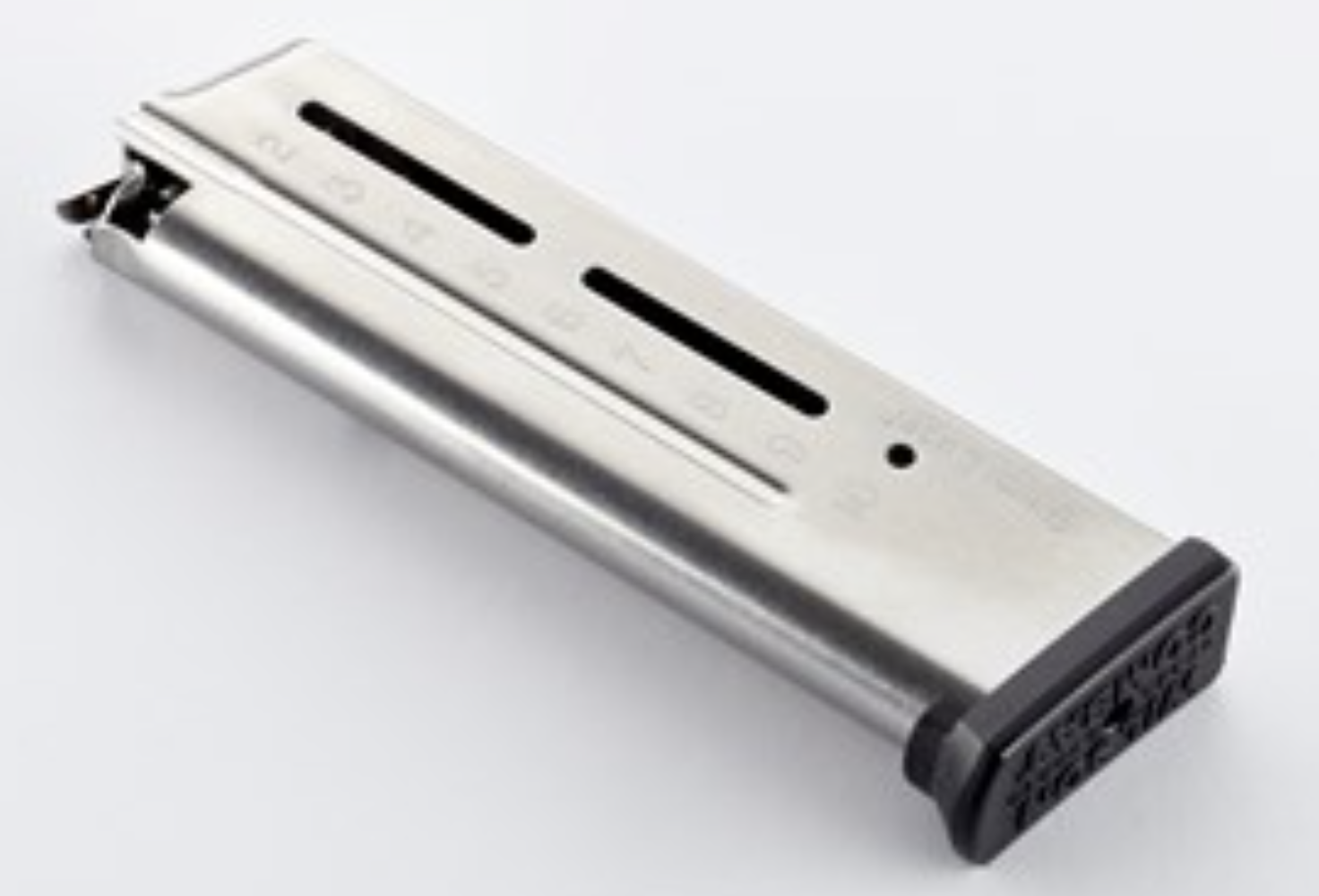




The Wilson Combat 1911 Elite 9mm 10 round magazine is widely regarded as the finest magazine you can feed a 9mm 1911, and the company has the round count to back the claim. Bill Wilson personally logged more than 10,000 rounds of factory and reloaded 9mm ammunition during development, and a cadre of professional shooters ran these magazines hard in competition and tactical settings before the design was signed off. That is a level of validation almost nothing else in the magazine aisle can match.
What the Wilson Combat 1911 Elite magazine is and who it is for
This is a full size 9mm 1911 magazine built by Wilson Combat for shooters who treat the magazine as a serious component rather than a disposable accessory. On a 1911 the magazine controls feed angle, slide lock and release timing, which means it largely decides whether the pistol runs at all.
Competitors, defensive shooters and anyone running a 9mm 1911 in a 10 round jurisdiction are the natural buyers. So is the owner of a pistol that has always been a little temperamental, because a Wilson Combat 1911 Elite magazine is frequently the cheapest fix for a gun that will not lock back or hesitates on the last round.
Features that set it apart
Every element of this magazine exists to remove a known 1911 failure mode.
- Strongest stainless steel ETM magazine tube the company has developed
- Heavy .025 inch wall thickness that resists feed lip cracking and tube spread
- Numbered tubes so you can track rotation and retire a suspect magazine
- Observation slots relocated to the rear of the tube where they are actually useful
- Steel follower for flawless slide lock even in marginal pistols
- Loads and seats easily with the slide in battery, and locks the slide positively when empty
Specifications and construction of the Wilson Combat 1911 Elite tube
The magazine is chambered for 9mm, holds 10 rounds, and is built for full size 9mm 1911 pistols. The tube is stainless steel in the ETM pattern, numbered for tracking, with a measured wall thickness of .025 inch and a steel follower inside.
Those numbers matter more than they look. Thin tubes spread at the feed lips under repeated loading and drop damage, and a spread tube is the root cause of the nose dives and failures to lock back that owners usually blame on the extractor or the recoil spring. A heavier wall simply refuses to deform on the same schedule.
Feeding stays superb across a wide range of ammunition types, from light target loads to heavier defensive rounds, which is exactly what a serious 1911 demands from its magazines.
Practical use, care and rotation
Number the magazines in your rotation and actually use the numbers. When one starts producing stoppages, mark it and pull it from the pile, and you have diagnosed a problem most shooters chase for months.
Cleaning is simple. Disassemble occasionally, wipe the tube interior and the follower dry, check the spring for kinks and reassemble. Skip the oil inside the tube, since it collects powder residue and lint that slow the follower.
Inspect the feed lips after any hard drop on a concrete bay. Steel is tough, but a magazine that has landed loaded from belt height deserves a look before it goes back into a match. Owners building a full rotation should browse the rest of our handgun and rifle magazines and set up a matched set in one order.
Shoot your spares rather than storing them untouched. A magazine that gets used tells you far more about its true condition than one that has sat loaded in a drawer for three years, and rotating them keeps every unit in your kit honest.
Buy good magazines and most 1911 reliability arguments disappear. That is the entire case for the Wilson Combat 1911 Elite, and it holds up round after round. Ships direct to your door, no FFL required.


Reviews
There are no reviews yet.