AR-15 Upgrades That Actually Matter: A Practical Priority List
AR-15 upgrades ranked by real world payoff: optics, triggers, free float handguards and reliability parts first, cosmetics last, with budgets and legal notes.
Most AR-15 upgrades sold today do nothing measurable for how you actually shoot, and the handful that do get bought last. The rifle is the most modular firearm ever built, which is a gift and a trap: you can spend $2,000 on parts without ever improving a single group on paper. This is a priority list for AR-15 upgrades built around one question, applied to every part. Does this change what happens between the trigger press and the hole in the target? If the answer is no, it goes to the bottom of the list.
Before Any AR-15 Upgrades: Ammunition and Training
The cheapest accuracy upgrade is not a part at all. A 16 inch carbine that groups four inches with bulk 55 grain steel case ammunition will often group under two inches with quality 69 or 77 grain match ammunition, with no AR-15 upgrades at all. Buy a few different loads, shoot them off a bag at 100 yards, and find out what your barrel likes before you decide the barrel is the problem. A case of good ammunition and a class costs about what a premium trigger and handguard cost together, and it will improve your shooting more.
The AR-15 Upgrades That Actually Change Your Shooting
These are the three that earn their money on almost every rifle, in this order.
- Optic and mount. The single largest practical improvement available. A quality red dot or low power variable, on a mount from a reputable maker, torqued correctly, transforms speed and hit probability. Spend more on the mount than feels reasonable; a $600 optic on a $20 mount is a $20 optic.
- Trigger. A standard mil-spec AR trigger is specified at 5.5 to 8.5 pounds of pull weight under MIL-C-71186, and it is gritty by design. A quality drop in unit at 3.5 to 4.5 pounds, or a two stage trigger for precision work, removes a real source of shot to shot inconsistency. Makers such as Geissele publish exact pull weights and stage breakdowns so you can pick deliberately rather than by feel in a store.
- Sling. The most under appreciated of all AR-15 upgrades and usually under $60. A two point adjustable sling is a shooting aid, a carry method and a retention device. It stabilizes offhand shots in a way no accessory bolted to the rail can.
The Second Tier of AR-15 Upgrades
Once the three above are handled, these are worth real money.
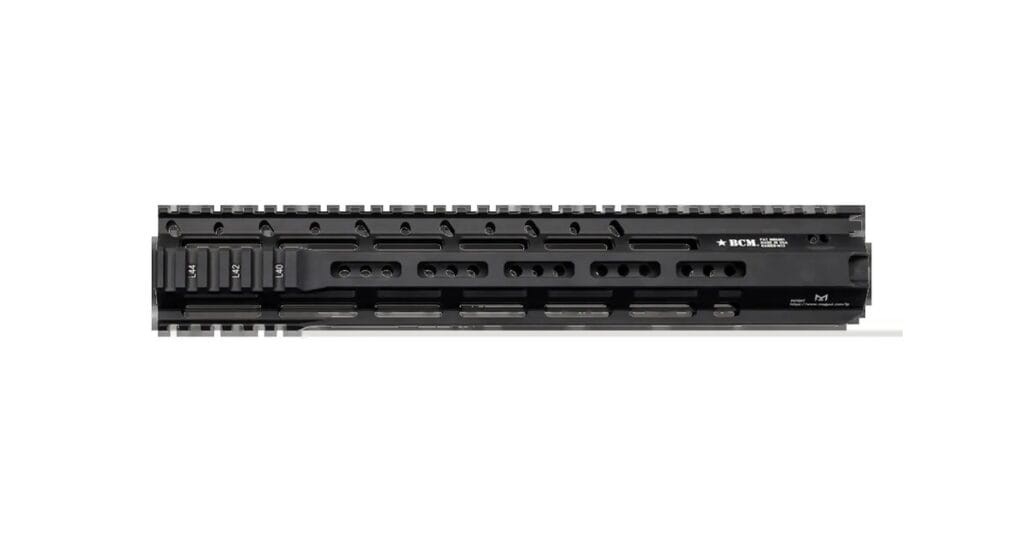
A free float handguard. On a rifle with a traditional drop in handguard, the front sight base and handguard cap clamp directly to the barrel, so any pressure you apply through a sling or a barricade shifts your point of impact. A free float rail attaches only to the receiver and leaves the barrel untouched. The change is most visible when you shoot supported, off a bag, or under sling tension. M-LOK has become the dominant accessory attachment standard, so choose it over older systems for the sake of accessory availability.
A weapon light. If the rifle has any defensive role, a light belongs near the top of your AR-15 upgrades list, because identifying a target in the dark is not optional. Buy a light with a proven output and a proper mount, and put the switch where your support hand naturally sits.
A better barrel, if the current one has earned replacement. Twist rate matters more than most buyers realize. A 1:7 twist stabilizes heavy 75 to 77 grain match projectiles; a 1:9 barrel often will not. Gas system length matters too: a mid length gas system on a 16 inch barrel gives a longer dwell time and a noticeably softer, more reliable cycle than a carbine length system on the same barrel. Chrome lined barrels last longer under sustained fire, nitrided and stainless barrels typically shoot tighter groups.
Reliability Parts Worth Getting Right
These AR-15 upgrades do not make the rifle more accurate. They stop it stopping, which on a defensive carbine is worth more than a tighter group.
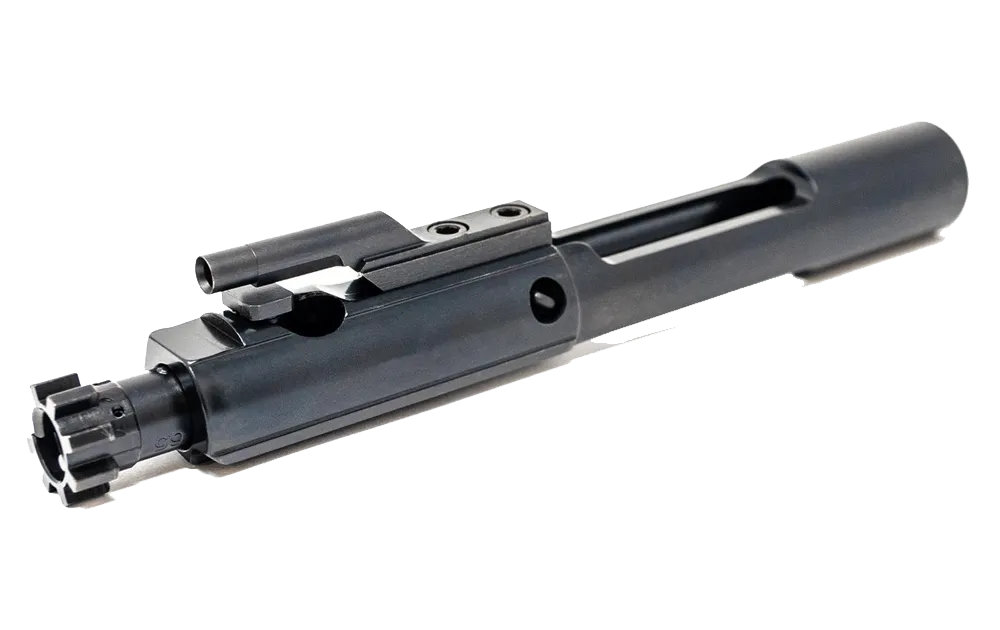
- Bolt carrier group. Look for a bolt that has been magnetic particle inspected and high pressure tested, a shot peened carrier, and a gas key that is properly staked. A cheap unstaked gas key will loosen and cause short stroking.
- Extractor spring and insert. A worn extractor spring is behind a surprising share of failures to extract. It is a consumable, and it is a few dollars.
- Buffer and spring. An H or H2 buffer and a quality flat wire spring are cheap AR-15 upgrades that smooth out an over gassed carbine. Change one variable at a time so you can tell what actually helped.
- Magazines. Buy quality polymer or good aluminum bodies with anti tilt followers, and retire any magazine you cannot trust. Magazines are the most common cause of stoppages in any AR.
AR-15 Upgrades That Are Mostly Decoration
Skeletonized parts, colored anodizing, ambidextrous controls you do not need, angled foregrips added because the rail looked empty, and enormous muzzle brakes on a 5.56 rifle that already has almost no recoil. Brakes in particular carry a real cost: they redirect blast sideways and make the rifle unpleasant for everyone next to you on the line, for a reduction in muzzle rise you may not need. A standard A2 flash hider remains a perfectly reasonable choice on a general purpose carbine.
A Note on the Law Before You Order AR-15 Upgrades
Configuration rules vary by state and sometimes by city. Several states restrict specific features, magazine capacity, or particular models by name, and a combination of AR-15 upgrades that is entirely lawful in Kansas may not be lawful elsewhere. Barrel length is federal: assembling a rifle with a barrel under 16 inches, or an overall length under 26 inches, creates a short barreled rifle regulated under the National Firearms Act, which requires an approved ATF registration before assembly.
As of January 1, 2026 the $200 making and transfer tax no longer applies to short barreled rifles and suppressors, but the registration, fingerprint and approval requirements remain fully in force. Check the current guidance at atf.gov and your own state’s law before you buy a short barrel or an upper you cannot legally assemble.
Frequently Asked Questions
Which of the AR-15 upgrades should I buy first on a stock rifle?
An optic with a quality mount, assuming you have a reliable rifle and good ammunition. It changes your speed and your hit rate at every distance. If the rifle already wears a good optic, the trigger is next.
Do AR-15 upgrades void anything or hurt resale value?
Manufacturer warranties on the rifle can be affected by internal changes, so check yours. Resale usually favors a rifle with quality upgrades installed but the original parts kept in a bag. Keep the factory trigger, handguard and stock so you can return the rifle to stock configuration for a buyer who prefers it.
How much should I budget overall?
A realistic plan is roughly $400 to $700 for a solid optic and mount, $150 to $250 for a good trigger, $50 for a sling, and $150 to $250 for a light. That covers the AR-15 upgrades that actually matter. You can browse compatible parts and optics in our online store, and if you are ordering a complete rifle rather than components, our FFL transfer guide explains how the shipping side works.
Shop what you just read about
Ammunition, optics, parts and gear, shipped to all 50 states. Firearms transfer through your local dealer.
Browse the inventoryKeep reading
Kansas Deer Season 2026: An 11-Week Countdown to the Dec. 2 Rifle Opener
Kansas firearm deer season opens Wednesday, Dec. 2, 2026, and closes Sunday, Dec. 13. Archery and muzzleloader seasons open today,…
Read more ›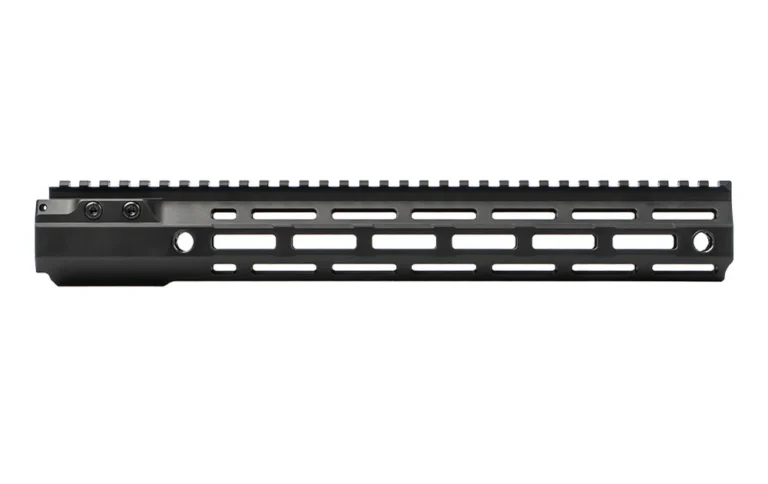
Aero Precision MOD 4 Handguard: Which Length to Buy and What It Fits
The Aero Precision MOD 4 handguard is the part people call us about most. The questions are nearly always the…
Read more ›
IWB vs OWB Holsters: How to Choose the Right Carry Holster
IWB hides better, OWB is more comfortable and faster. Here is the honest difference between the two carry styles and…
Read more ›