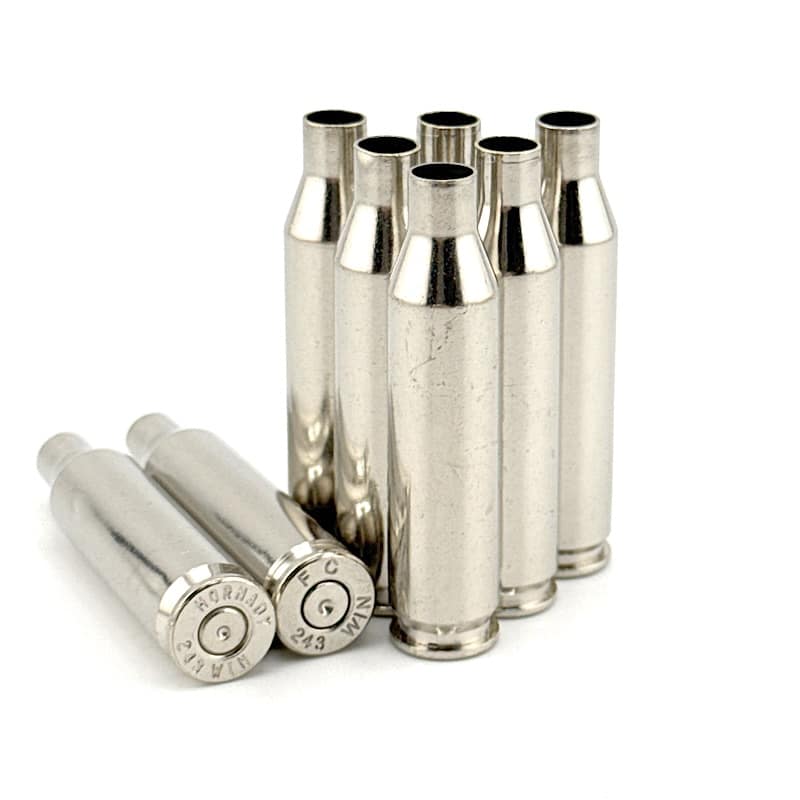
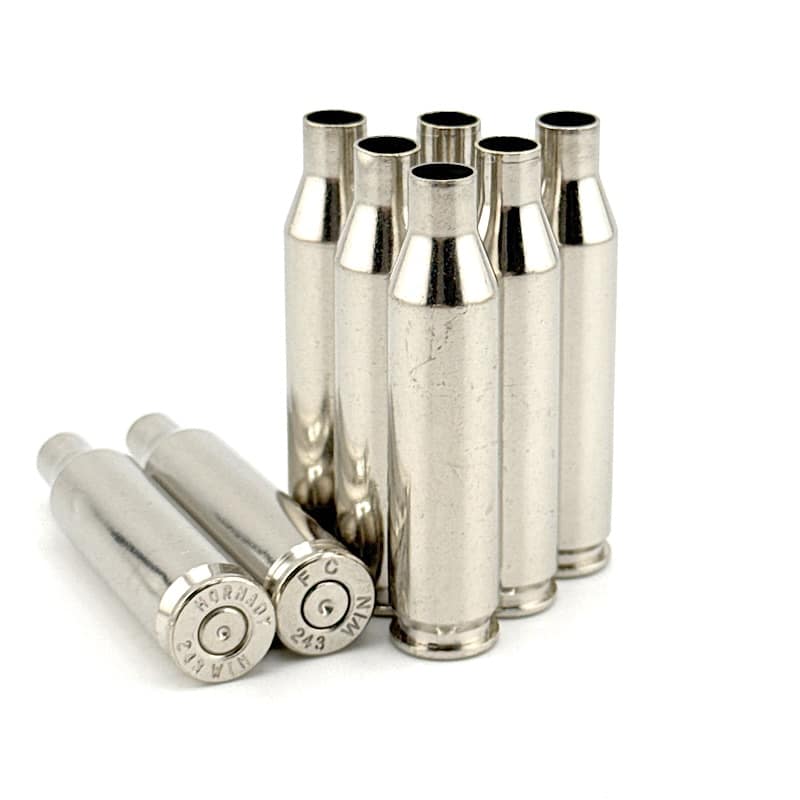
This .243 Win 100 count lot of nickel range brass is a reloader’s shortcut to a season of cheap, accurate shooting. You get a full hundred pieces of nickel plated cases in mixed commercial headstamps, sorted and ready for your press. For anyone who feeds a varmint rifle or a deer rifle in this caliber, brass is the expensive part of the equation and this is how you fix that.
What the .243 Win 100 count nickel lot is and who needs it
Range brass is exactly what it sounds like: once fired cases collected from the firing line rather than pulled from new factory ammunition. The savings are substantial, and for a reloader the case is simply a container that gets resized, primed, charged, and topped with a bullet. Once fired cases have already been through the harshest pressure cycle they will ever see, and the survivors are the ones worth loading.
Nickel plated cases are the premium version of that container. The plating resists corrosion, slides through dies with less effort, and stands out clearly against grass and gravel when you are policing brass at the end of a long day.
Handloaders chasing a low cost per round are the obvious buyers of a .243 Win 100 piece lot. Varmint shooters who burn through ammunition on prairie dog towns benefit most, since their volume is high and their brass budget is finite.
What is in the bag
The .243 Win 100 count listing is a straightforward component purchase with no surprises.
- One hundred pieces of once fired range brass, ready to inspect, clean, and size for your own loads.
- Nickel plated cases that resist tarnish in storage and stay bright in a loading block for years.
- Mixed commercial headstamps, which keeps the price down while remaining perfectly usable for general purpose loads.
- A caliber with an outstanding reputation for accuracy, low recoil, and flat trajectory on varmints and deer sized game.
- A count that matches how most people actually load, in batches rather than by the thousand.
- A component that costs a fraction of new brass while doing exactly the same job on the bench.
Specifications and what mixed headstamps really mean
Mixed commercial headstamps mean the cases came from several manufacturers, so internal case volume can vary slightly from brand to brand. That is a non issue for plinking and general varmint loads, and it is easy to manage by weight sorting if you want to tighten your groups further.
Nickel plating is a surface treatment over standard brass, so it sizes, trims, and anneals like any other case with slightly different friction characteristics. Use a good case lube, keep an eye on neck tension, and this .243 Win 100 count batch will behave. Pair it with bullets and powder from the wider ammunition category and you have a complete reloading project.
Prep, storage, and reloading workflow
Start by inspecting every case in the .243 Win 100 count bag. Look for split necks, dented shoulders, and any primer pocket that feels loose, and set aside anything questionable before it reaches your press.
Then clean, resize, and trim to a uniform length. A .243 Win 100 count batch is small enough to process in a single evening, which is one of the real advantages of buying at this quantity rather than in bulk sacks of a thousand.
Store the finished cases in a sealed container with a desiccant pack. Nickel resists corrosion better than bare brass, but dry storage still protects primer pockets and keeps everything ready to load on short notice. The whole batch fits comfortably in a single ammo box or a small sealed tub, so it stays organized between loading sessions.
For a caliber this pleasant to shoot, a .243 Win 100 count lot of nickel brass is one of the smartest component buys on the shelf. Load it, shoot it, pick it up, and do it again. This ammunition ships straight to your door wherever state and local law allows.


Reviews
There are no reviews yet.