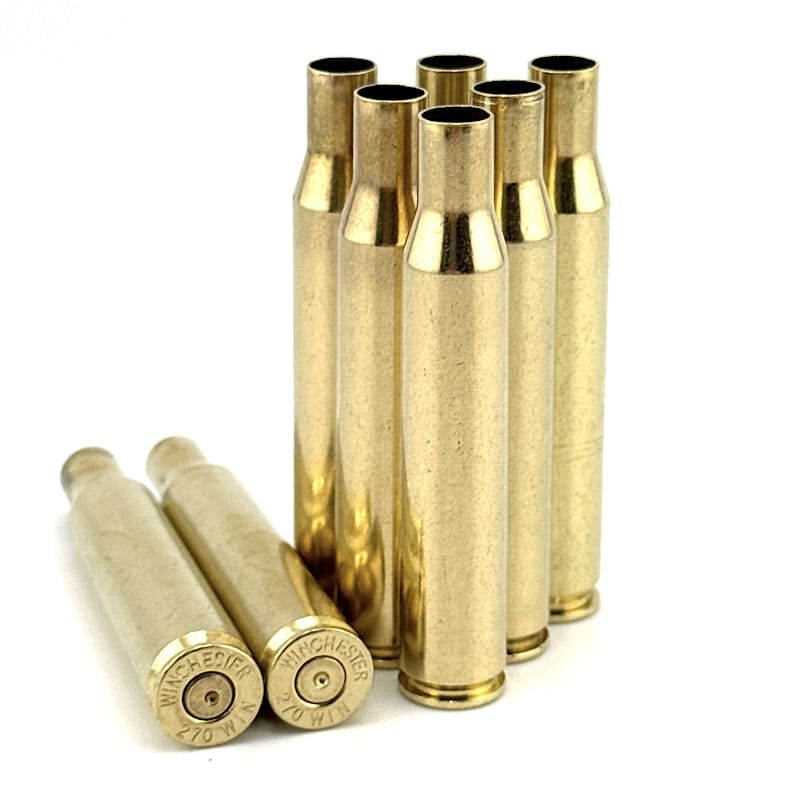
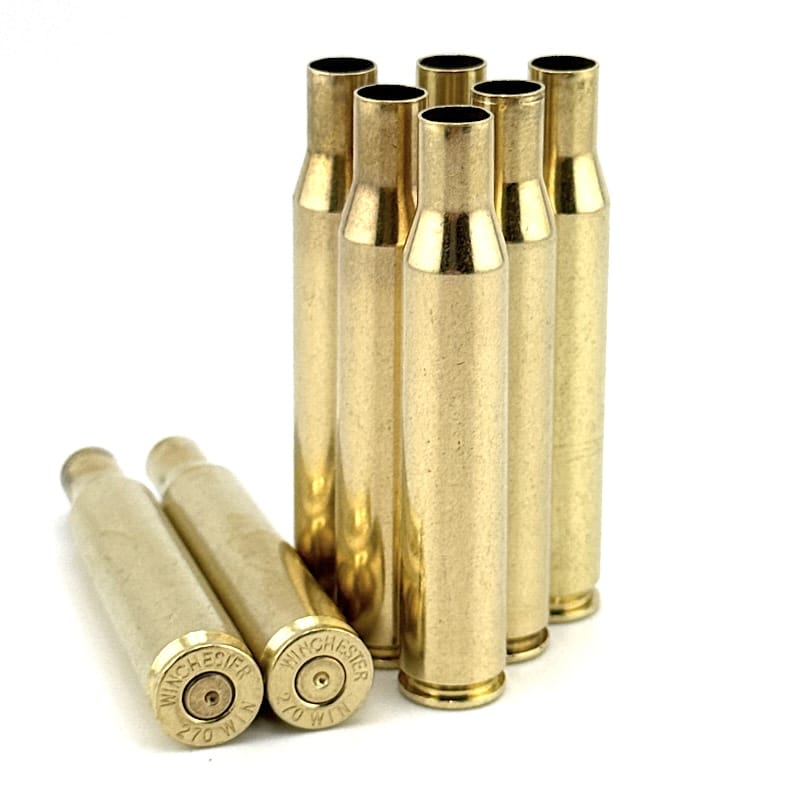
This .270 Win range brass lot puts 200 pieces of polished, once fired cases on your loading bench for a fraction of what new brass costs. The headstamps are mixed commercial, the cases have already been tumbled bright, and the whole batch is ready for inspection and sizing. For a deer hunter who reloads, this is the cheapest path to a full season of ammunition.
What this .270 Win brass lot is and who buys it
Range brass is once fired cases recovered from the firing line rather than pulled out of factory boxes. Nothing about a fired case is worn out, and the reloading process resizes it back into specification anyway, so buying used is simply buying smart. What you are really paying for is the drawn case itself, and that part has plenty of life left in it.
Hunters are the natural audience for this caliber. It has spent decades as one of the great North American deer cartridges, flat shooting enough for open country and mild enough in recoil that people actually practice with it. Reloading a .270 Win case is how you keep that practice affordable year after year.
Anyone building a handload for this rifle also gets flexibility that factory ammunition cannot match. You choose the bullet, the powder charge, and the seating depth, and you tune all three to the rifle you actually own instead of the average rifle a factory tested.
What is in the 200 count lot
Polished .270 Win brass is not a cosmetic detail, it is a workflow advantage from the first case to the last.
- Two hundred pieces of once fired range brass, enough for several years of hunting loads.
- Cases arrive polished, so you can inspect necks and case heads properly before anything reaches your dies.
- Mixed commercial headstamps, which keeps the price low while staying entirely usable for general hunting and practice loads.
- Clean brass that is gentle on sizing dies and does not carry grit into your press.
- A caliber with an enormous selection of component bullets, from light varmint weights to heavy deer and elk loads.
- A quantity that supports real load development instead of a single cautious test batch.
Specifications and what mixed headstamps mean for you
Mixed headstamps mean the .270 Win cases came from several manufacturers, so internal capacity varies a little between brands. For hunting loads inside normal ranges this makes almost no practical difference, and it is easily managed by sorting cases by headstamp or weight before a precision project.
The .270 Win case itself is a well understood, forgiving design with plenty of published load data behind it. Start low, work up carefully, and watch for pressure signs the same way you would with any handload. Published data exists for practically every bullet weight you might want to run. Bullets, powder, and loaded options are all in the wider ammunition category when you are ready to assemble.
Prep, storage, and loading workflow
Inspect first, always, because a case fired in somebody else’s rifle deserves a close look. Check every neck for splits, look at the case head for pressure signs from a previous owner, and reject anything that looks tired before you invest a primer in it.
Then size, trim to a uniform length, and chamfer the necks. A .270 Win batch of this size processes comfortably over a couple of evenings, and the polished starting condition saves you a tumbling step at the front of the job.
Store prepped cases in sealed containers with a desiccant pack, ideally sorted by headstamp. Dry, organized brass stays ready to load, and a lot kept this way will still be perfect the year after next.
If you shoot this caliber and own a press, buying .270 Win range brass by the 200 count lot is the single easiest way to cut your cost per round. Prep it once and it will serve you for many seasons. This ammunition ships straight to your door wherever state and local law allows.


Reviews
There are no reviews yet.