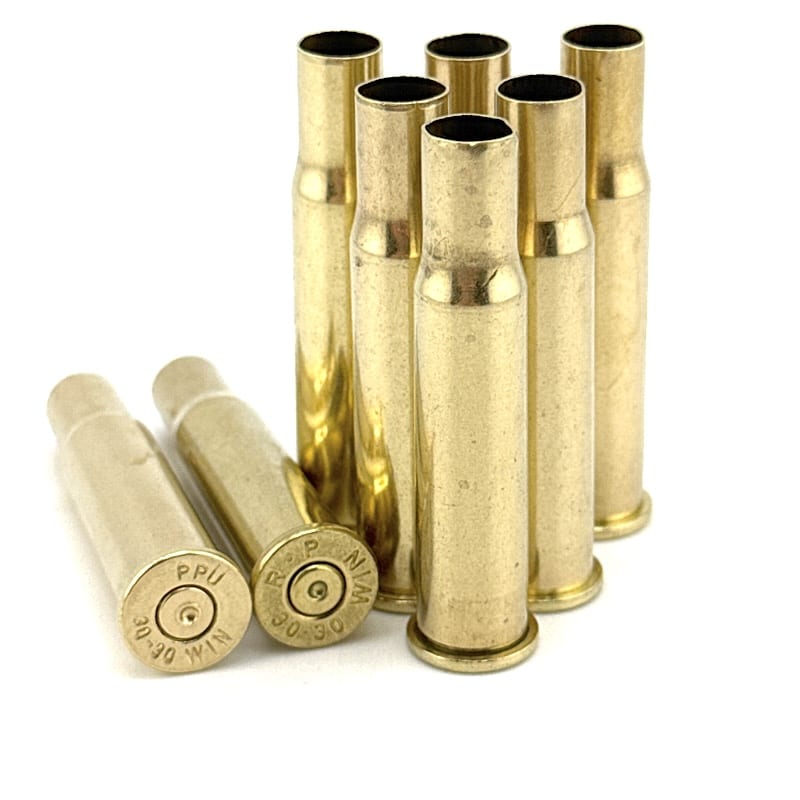

Lever gun handloaders will recognize this one immediately: the .30-30 30 Win lot is 200 pieces of polished range brass with mixed commercial headstamps, ready for the press. The .30-30 Winchester has been putting venison on tables since the 1890s, and it remains one of the most satisfying cartridges in the hobby to load. Good brass is the part that has become harder to find.
What the .30-30 30 Win Brass Lot Gives You
These are fired cases that have already been polished, so they arrive looking like something you want on your bench rather than something you found in the parking lot. Headstamps are mixed commercial, which is exactly right for a cartridge that is loaded by nearly every American manufacturer. Two hundred pieces is a genuinely useful quantity for a lever action rifle.
Most .30-30 rifles are not fired in thousand round sessions. They get carried, shot at deer, and taken to the range a few boxes at a time, which means a .30-30 30 Win lot of this size can cover several seasons of hunting and practice. Rotate through it, reload it, and the same cases keep coming back.
Features That Suit a Lever Action Reloader
- 200 count of once fired range brass, already polished and ready to inspect.
- Mixed commercial headstamps from the manufacturers who actually load this cartridge.
- A .30-30 30 Win batch this size covers years of hunting and practice for most shooters.
- Rimmed case design that headspaces on the rim, which makes sizing forgiving.
- Perfect foundation for flat nose and cast bullet loads in tubular magazine rifles.
.30-30 30 Win Specifications and Loading Notes
The lot is 200 polished cases in .30-30 Winchester with mixed commercial headstamps. Nothing is primed, charged, or loaded, so the recipe is entirely yours. That freedom is the reason people load this cartridge in the first place.
Tubular magazines require flat or round nose bullets, or the modern flexible tipped designs made specifically for the job, since pointed bullets rest against the primer of the round ahead. Crimp firmly into the cannelure so that recoil does not push bullets back into the case in the magazine. Everything else you need sits in our ammunition and components aisle.
Case Care, Storage, and Long Term Use
Check case length after every firing or two. Rimmed cases stretch like any other, and an overlong case in a lever gun can make chambering stiff at exactly the wrong moment. A simple trim die and five minutes per batch prevents the problem entirely.
Cast bullet shooters have a particular fondness for this cartridge, and moderate velocity lead loads are easy on brass. Loaded gently, a .30-30 30 Win case can go through many cycles before the neck work hardens enough to matter. Anneal if you like, or simply retire cases when mouths start to split.
Store the brass dry and sealed, and keep it away from ammonia based cleaners which attack case necks. A closed container with a desiccant pack on a shelf is all it takes. Polished brass that is kept dry still looks good years later.
There is a practical reason so many hunters load for this cartridge rather than buying factory boxes. Woods rifles get carried far more than they get fired, so a modest supply of brass lasts a very long time, and tailoring a load to one particular rifle usually tightens groups noticeably. A lever gun that shoots two inches at a hundred yards with handloads is a genuinely capable deer rifle.
Start with a .30-30 30 Win lot like this one and there is real satisfaction in feeding a hundred year old rifle design with ammunition you built yourself. This ammunition ships straight to your door wherever state and local law allows.


Reviews
There are no reviews yet.