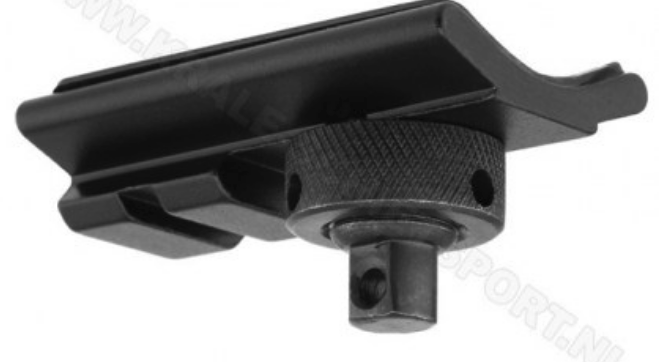
The CCOP bipod Picatinny attachment with swivel adaptor solves a common problem: your hunting rifle wears a standard sling swivel stud, but the bipod or accessory you want to run needs a Picatinny rail. This adaptor bridges that gap in about two minutes with no gunsmithing involved. It is simple hardware that quietly expands what your rifle can carry.
What the CCOP bipod Picatinny attachment does
It attaches straight to the existing sling swivel on the forend, with no drilling, tapping, or stock modification required, and gives the front of your rifle a proper Picatinny mounting point. Everything built for a rail section suddenly becomes an option.
Better still, it creates both a Picatinny rail section and a sling swivel attachment at the same time. Adding a rail mounted bipod does not mean giving up your sling, which is the compromise most stud based solutions force on you.
Key features
- Mounts to the existing sling swivel with no gunsmithing, drilling, or stock work.
- Provides a true Picatinny rail section at the front of the rifle.
- Retains a sling swivel attachment point so the sling stays on the gun.
- Fully reversible, so a stock can return to original condition at any time.
- Transferable between rifles that share the standard stud arrangement.
- Opens the door to rail mounted bipods, lights, and other Picatinny accessories.
The specifications and what they enable
The mounting standard is Picatinny, which is the reason this adaptor exists. Picatinny is the common language of modern rifle accessories, and a hunting rifle without a rail is locked out of a huge portion of the market until you add one.
Attachment is to the existing sling swivel, which is what makes the CCOP bipod Picatinny attachment so appealing to hunters. You are not committing to permanent changes on a rifle you may sell, hand down, or return to a lightweight walking configuration next season.
Providing a rail and a swivel simultaneously is the specification that matters most in the field. You want the rifle comfortable over your shoulder on the walk in and rock steady on the bipod when it is finally time to shoot, and this hardware refuses to make you choose.
Installation, use, and compatibility
Installation is straightforward. Remove the sling swivel, fit the adaptor to the stud location, snug it down properly, and confirm nothing shifts under hand pressure before you load a rail mounted bipod onto it.
Check torque again after the first range session and after the first hard day in the field, since anything mounted forward on a rifle sees recoil and vibration that finds loose fasteners. A drop of thread locker on the fastener is cheap insurance if the rifle is going somewhere remote.
Confirm your rifle has a conventional forend sling swivel stud before ordering, since that is the interface this adaptor uses. Once fitted, any standard Picatinny bipod clamp should mount to it, and the bipods and shooting rests category is the natural next stop for choosing one.
Care is minimal. Keep the mating surfaces clean, wipe road dust and grit off before mounting or dismounting a bipod, and give the hardware a light oil film if the rifle lives in wet country.
Weight and balance are worth a thought before you commit. Adding a rail and a bipod at the front of a light mountain rifle changes how it hangs on a sling and how it swings offhand, so take the completed setup out for a walk before opening weekend rather than discovering the difference on the hill.
The reversibility of the CCOP bipod Picatinny attachment is what makes that experiment risk free. If the rifle handles better without it, the adaptor comes off in minutes and the stock is exactly as it was, with no filled holes or regrets attached.
Small part, big change
Simple, useful hardware that expands what your rifle can carry without changing anything permanent about it. Ships direct to your door, no FFL required.


Reviews
There are no reviews yet.