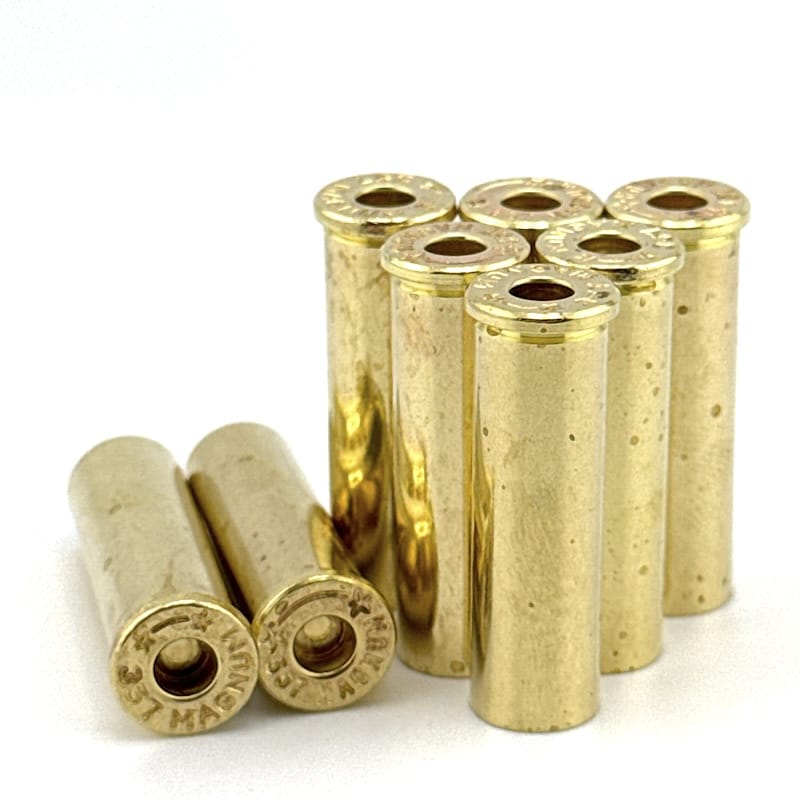
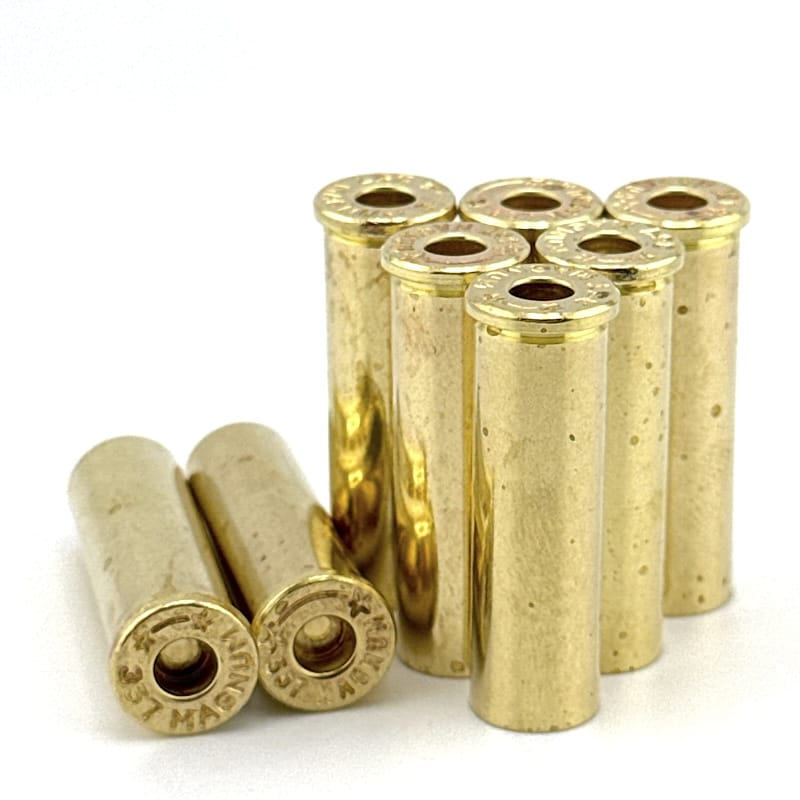
Load development goes a lot smoother when you start with new 357 Magnum brass instead of somebody else’s fired cases. This is factory new Starline .357 Mag brass, 500 pieces, uniform from the first case to the last. For a handloader chasing accuracy or working up a full house magnum load, that uniformity is the whole point.
Why New 357 Magnum Brass Changes Your Results
Range pickup brass carries unknown history. You do not know how many times it has been fired, at what pressure, or how far the mouths have already been worked. Factory fresh cases remove every one of those variables in one purchase.
The .357 Magnum is essentially a lengthened .38 Special case, which makes it one of the friendliest cartridges in the handloading world. It is also one of the most popular handgun calibers on earth, chambered by nearly every revolver manufacturer and by a long list of lever action carbines. Starting with new 357 Magnum cases means your first fired batch becomes a matched set of once fired brass for the next dozen loadings.
Features That Matter at the Bench
- Factory new Starline brass, 500 count, with no unknown firing history behind it.
- Takes small pistol magnum primers, the correct choice for slow burning magnum powders.
- New 357 Magnum cases arrive uniform in weight and capacity, which tightens velocity spread.
- Listed at 1.275 to 1.285 overall length, so trimming to a common length is straightforward.
- Works in revolvers and lever guns alike, since the cartridge is chambered in both.
Specifications and Load Development
The lot is 500 pieces of new brass in .357 Magnum, sized for small pistol magnum primers, with a stated dimension of 1.275 to 1.285 inches. Those are the numbers that matter before you start pulling the handle. Everything after that is powder selection, bullet choice, and careful record keeping.
Because these are new 357 Magnum cases rather than mixed range brass, a ladder test actually tells you something. Velocity spread narrows, group sizes mean what they appear to mean, and the pressure signs you read on a case head are honest. Pair the brass with components and finished loads from our ammunition department and you can build the whole project from one order.
Practical Use, Case Care, and Storage
Magnum revolver brass lives a hard life, so treat it well from the beginning. Chamfer and deburr the mouths before the first loading, seat primers with consistent feel, and crimp firmly enough to stop bullets jumping under recoil in a heavy load. Those habits set up a case for many cycles.
Anyone loading for a lever carbine should pay extra attention to crimp and overall length, since tubular magazines and feed ramps are less forgiving than a cylinder. The good news is that a set of new 357 Magnum cases lets you standardize on one length from the start. Consistency there prevents most feeding complaints before they happen.
Store the brass in sealed containers with a desiccant pack, especially if your bench sits in a garage or basement. New cases will tarnish if left exposed to damp air, and green corrosion in a primer pocket ends a case early. Kept dry, this brass will outlast several barrels.
Keep the lot together as it ages. Number your batches, track how many firings each one has seen, and retire a group when case mouths start splitting rather than waiting for a failure at the range. Five hundred pieces is enough to run two or three separate batches side by side, which is how most shooters compare a light target charge against a heavier hunting load.
Whether you are building light .38 style practice loads or working toward full power magnum performance, a box of new 357 Magnum brass is the right foundation to start from. This ammunition ships straight to your door wherever state and local law allows.


Reviews
There are no reviews yet.