Red Dot vs LPVO: Which Optic Should You Run?
A red dot is faster up close and simpler; an LPVO reaches out to distance. Here is how to choose the right optic for your rifle.
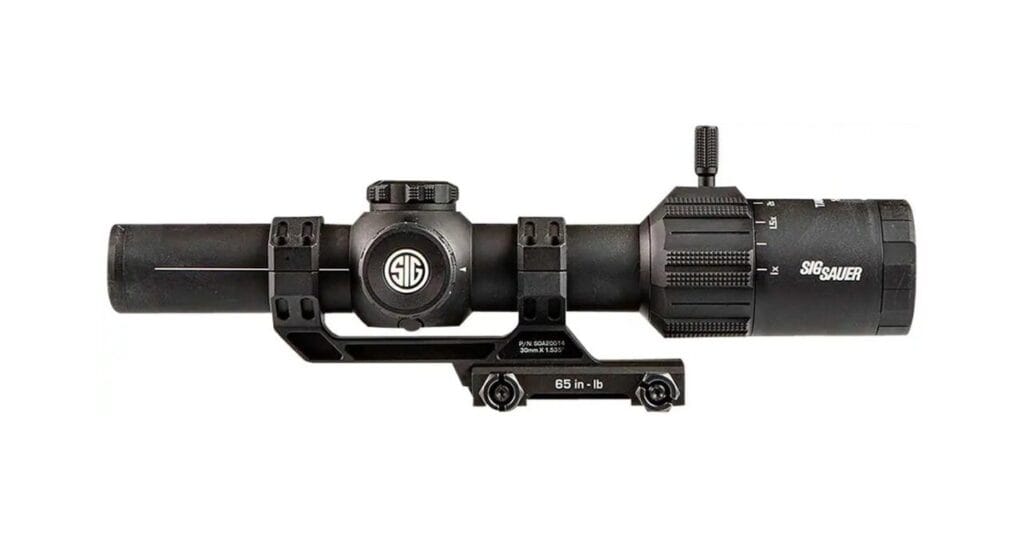
You have a rifle and you know it needs glass. The question almost everyone gets stuck on is whether to run a red dot or a low-power variable optic, an LPVO. They solve the same problem, putting rounds on target quickly, in very different ways, and the right answer depends entirely on how far you expect to shoot.
Short version: a red dot is faster up close and dead simple; an LPVO reaches out and lets you identify and hit targets at distance. Close-quarters and speed favor the red dot. Any real distance favors the LPVO. Many serious rifles end up with a red dot plus a magnifier, which is a third path worth knowing about.
Red dot: speed and simplicity
A red dot sight projects a single aiming point. You put the dot on the target and press. There is no magnification, so both eyes stay open and your field of view is wide, which makes it extremely fast at close range and forgiving of head position. Red dots are also light, rugged, run for thousands of hours on a battery, and cost less than a good LPVO.
The limit is distance. With no magnification, a red dot gets harder to use precisely as targets shrink with range. Past a couple hundred yards, a bare dot covers a lot of the target and small aiming errors grow.
- Best for: home defense, close to mid range, fast target-to-target shooting, a light and simple setup, tight budgets.
- Give up: reach and precision at distance, and any ability to magnify and identify far targets.

LPVO: one optic, close to far
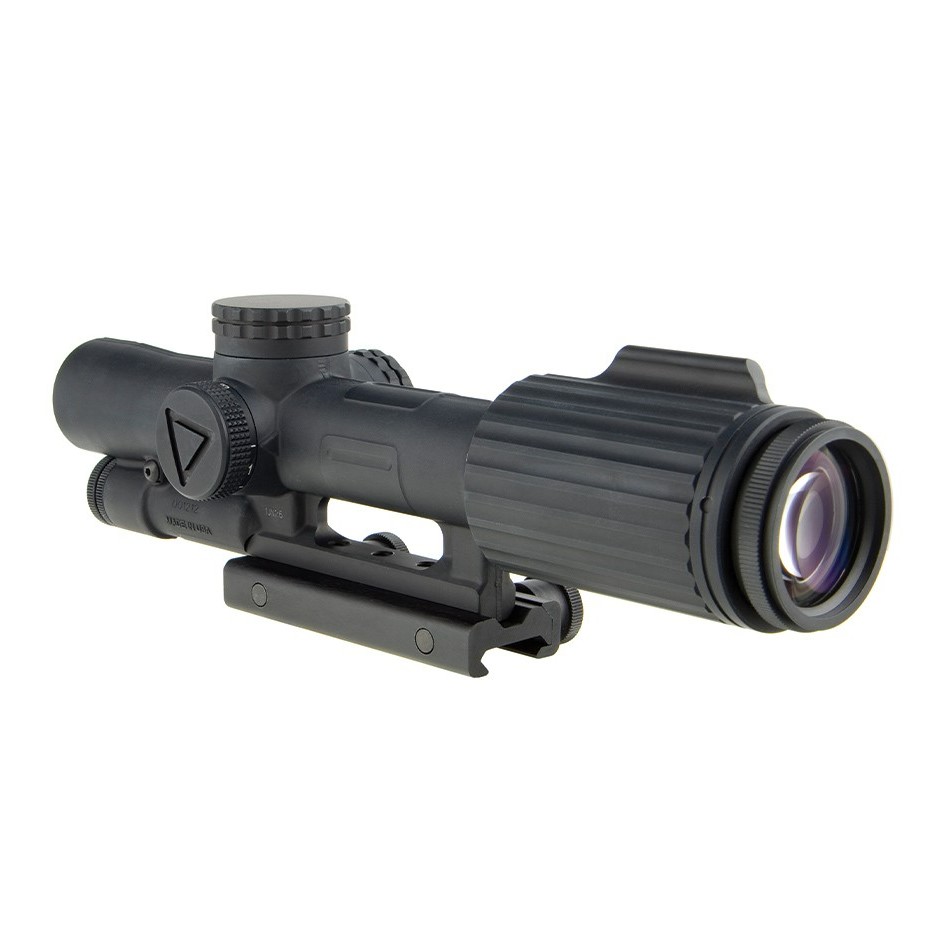
A low-power variable optic zooms from 1x, which behaves much like a red dot with both eyes open, up to 6x, 8x or 10x for reaching out. That range is the whole point: at 1x you are fast up close, and a twist of the dial lets you identify and precisely hit targets well past where a red dot is useful. For a do-everything rifle, the LPVO is hard to beat.
The trade-offs are weight, cost and a little complexity. LPVOs are heavier and pricier than most red dots, the eye box at higher magnification is less forgiving of head position, and a quality one is a real investment. A good mount matters too.
- Best for: a general-purpose rifle, any shooting past 100 to 150 yards, target identification at distance, one optic that does it all.
- Give up: some weight and money, and a touch of up-close simplicity versus a bare dot.
The third option: red dot plus magnifier
You can also run a red dot with a flip-to-side 3x magnifier behind it. Flip the magnifier in for a little reach, flip it out for pure red-dot speed. It keeps the dot fast up close and adds some distance capability without committing to an LPVO. It is bulkier than a single optic and the magnifier is a fixed 3x rather than a smooth zoom, but plenty of people love the flexibility.
How to choose
- How far will you actually shoot? Mostly inside 100 yards, a red dot is faster and cheaper. Regularly past that, an LPVO earns its keep.
- Home defense rifle? A red dot is fast, simple and light. That is usually the right call inside a house.
- One rifle for everything? The LPVO is the most versatile single optic. If you want to buy once, buy the variable.
- Budget? A quality red dot costs less than a quality LPVO. A cheap LPVO is a false economy, so if the budget is tight, a good red dot beats a bad variable.
New to optics generally? Start with our guide on how to choose a red dot sight, then browse red dots and rifle scopes.
Red dot vs LPVO frequently asked questions
Is a red dot or LPVO better for an AR-15?
It depends on range. For a close-to-mid-range or home-defense AR, a red dot is faster, lighter and cheaper. For a do-everything AR that may reach past 150 yards, an LPVO is more versatile.
Is an LPVO good for home defense?
It can be, run at 1x, but a red dot is simpler, lighter and faster in tight spaces. Most people prefer a red dot on a dedicated home-defense rifle.
What does LPVO stand for?
Low-power variable optic. It is a rifle scope with a low magnification range, typically starting at 1x and going up to 6x, 8x or 10x, so it works both up close and at distance.
Do I need a magnifier with a red dot?
Only if you want more reach. A red dot alone is fine for close and mid range. Adding a flip-to-side 3x magnifier extends its useful distance while keeping the dot fast up close.
Why are LPVOs so much more expensive?
They contain far more glass and precision mechanics than a red dot, and quality matters a lot in a variable optic. A good mount adds to the cost. A cheap LPVO usually disappoints, so it is a place worth spending.
Shop what you just read about
Ammunition, optics, parts and gear, shipped to all 50 states. Firearms transfer through your local dealer.
Browse the inventoryKeep reading
The Thermal Spec Sheet, Decoded: What Each Line Means and What It Costs
Every thermal optic comes with the same wall of numbers. 384×288. 12 micron. Under 25mK. 50Hz. 1,800 yards. Most buyers…
Read more ›
How to Choose a Rifle Scope: Magnification, Focal Plane and Mounts
Most people shopping for their first serious optic make the same two mistakes. They buy more magnification than the rifle…
Read more ›
How to Choose a Red Dot Sight: MOA, Battery Life and Mounting Explained
How to choose a red dot sight without wasting money: MOA dot sizes explained, real battery life numbers, co-witness heights,…
Read more ›