.223 vs 5.56: The Real Difference, and Which One Your Rifle Can Shoot
A rifle stamped 5.56 shoots both .223 and 5.56; a rifle stamped .223 should not shoot 5.56. Here is why, and how to tell which chamber you have.
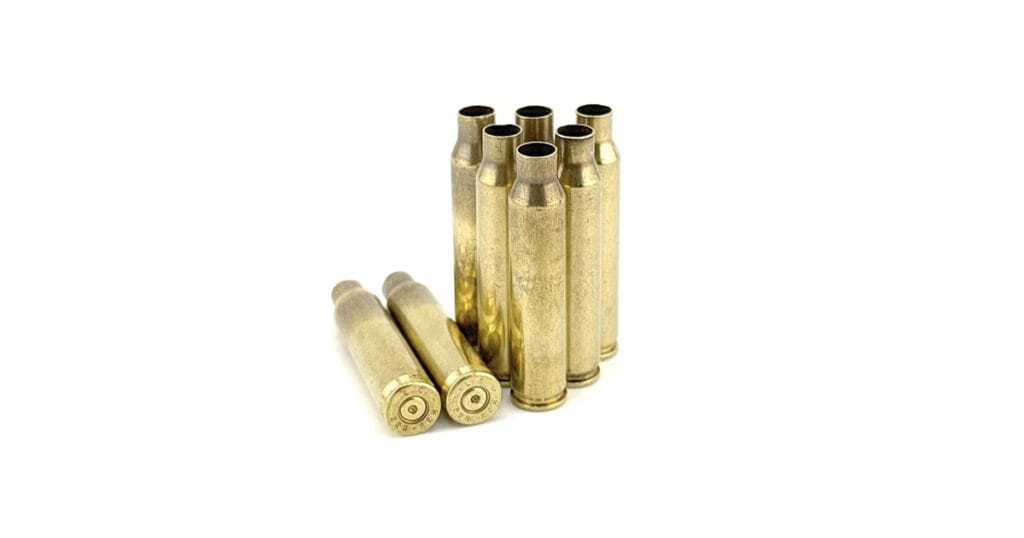
Walk down any ammo aisle and you will see .223 Remington and 5.56 NATO sitting side by side, often for a few dollars’ difference, and almost always with someone standing there wondering if it matters which one they grab. It does, but not for the reason most people think. The two are close enough that they physically chamber in the same rifles, which is exactly what makes the wrong answer dangerous instead of just annoying.
Here is the short version before we get into it: a rifle stamped 5.56 will shoot both. A rifle stamped .223 should only be fed .223. Everything else is detail. If you remember nothing else, remember that.
Why they look identical
The .223 Remington case and the 5.56x45mm NATO case share the same external dimensions. Same length, same shoulder, same rim. Drop one of each on the bench and you will not tell them apart without reading the headstamp. That is not a coincidence. The 5.56 was developed from the .223 in the early 1960s for the military, and the civilian and military rounds grew up as close cousins.
Because the brass is the same size, both will slide into the same chamber and the bolt will close on either one. The gun does not know what you fed it until you pull the trigger. That is where the cousins stop being interchangeable.
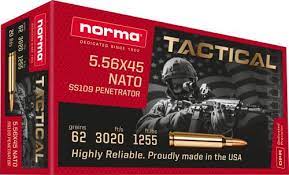
The difference is pressure, not the case
5.56 NATO is loaded hotter. It runs at a higher chamber pressure than .223, and it is usually loaded to push a bullet faster. On paper the gap looks small, but a rifle chamber does not deal in “small” when it comes to pressure.
The second difference is the part you cannot see: the throat, or leade. That is the short stretch of barrel just ahead of the chamber before the rifling grabs the bullet. A 5.56 chamber has a longer leade. A .223 chamber has a shorter, tighter one. When you fire a high-pressure 5.56 round in a tight .223 chamber, the bullet meets the rifling sooner, pressure spikes higher than the round was designed for, and you can end up over the safe limit for that barrel.
Fire it once and you probably will not blow up a rifle. Fire it as a habit and you are running your gun hotter than it was built for, which shows up as blown primers, hard extraction, and accelerated wear long before it ever shows up as a headline.
What your rifle can safely shoot
Check the barrel. It is stamped near the chamber, and it tells you what you can feed it.
- Marked 5.56 NATO: shoots both 5.56 and .223 safely. .223 in a 5.56 chamber is completely fine, it just gives up a little velocity because of the longer throat. This is the setup most AR-15s ship with.
- Marked .223 Remington: shoot .223 only. Skip the 5.56.
- Marked .223 Wylde: a hybrid chamber designed to run 5.56 pressures safely while keeping .223-level accuracy. Best of both, and popular on match-oriented ARs. If your barrel says Wylde, you can shoot either.
If the barrel is not marked or you bought the rifle used and cannot confirm, treat it as .223 until you know otherwise. That is the cautious call and it costs you nothing.
So which should you actually buy?
For most people running a standard AR-15 with a 5.56 or Wylde chamber, buy whichever is cheaper and in stock, because your rifle handles both. Day to day it will not care.
Where it starts to matter:
- Bulk practice and range days: 5.56 is usually the value play, sold in cans and battle packs. If your chamber accepts it, this is where the savings live. Browse what is in stock in our rifle ammunition section.
- Precision and handloads: serious accuracy shooters often prefer .223 or a .223 Wylde barrel, where the tighter, consistent throat helps groups.
- Bolt guns and older rifles: many are true .223 chambers. Feed them .223 and do not overthink it.
How to tell what chamber you have
Start with the barrel stamp, since it is the fastest and it is right there. If the roll mark is worn or hidden under a handguard, the manufacturer’s spec sheet for that model will list the chamber. When you are buying a new upper or complete rifle, the chamber is part of the listing, so you will know before it ships. If you are building, the barrel you choose sets the answer, which is one more reason to read the description on the barrel you pick rather than assume.
.223 vs 5.56 frequently asked questions
Can I shoot 5.56 in a .223 rifle?
No, not as a practice. A .223 chamber is tighter than the higher-pressure 5.56 round was designed for, so pressure can climb past the safe limit for that barrel. A 5.56 or .223 Wylde chamber, on the other hand, shoots both.
Is .223 weaker than 5.56?
Slightly. .223 runs at lower pressure and usually a touch less velocity. For punching paper, plinking, and most hunting inside a couple hundred yards, the difference is small enough that you will not feel cheated.
What is .223 Wylde?
A chamber design, not a cartridge. It is cut to handle 5.56 pressures safely while keeping the tighter tolerances that help .223 accuracy. If your barrel is stamped .223 Wylde, you can shoot either round.
Will shooting .223 hurt my 5.56 barrel?
No. Running the lower-pressure .223 in a 5.56 chamber is safe and common. You lose a little velocity to the longer throat and that is the whole downside.
How do I know which one my rifle takes?
Read the stamp on the barrel near the chamber, or check the maker’s spec sheet for your exact model. When in doubt, treat it as a .223 chamber and shoot .223 only.
Shop what you just read about
Ammunition, optics, parts and gear, shipped to all 50 states. Firearms transfer through your local dealer.
Browse the inventoryKeep reading
Ammo Prices in 2026: What to Buy Before Deer Season, What Can Wait for the Holiday Sales
Ammo costs more than it did a year ago. Several of the biggest US ammo brands raised prices in April…
Read more ›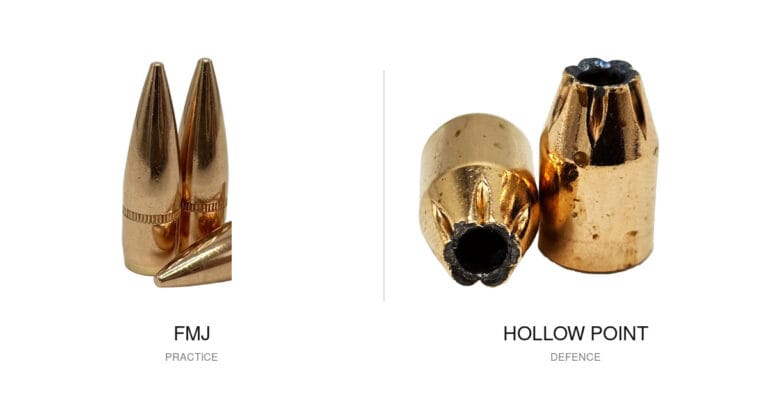
FMJ vs Hollow Point: Which Ammo Should You Actually Buy?
FMJ is for practice, hollow point is for defence. Here is what actually differs, why overpenetration is the argument that…
Read more ›
Buckshot vs Birdshot vs Slugs: Shotgun Shells Explained
Birdshot is for birds, buckshot for defense, and slugs for range and penetration. Here is what each shotgun shell does…
Read more ›