FMJ vs Hollow Point: Which Ammo Should You Actually Buy?
FMJ is for practice, hollow point is for defence. Here is what actually differs, why overpenetration is the argument that matters, and how to buy both sensibly.

Stand at the ammo counter long enough and you will hear the same question every week. Two boxes, same caliber, same brand, and one costs three times the other. One says FMJ. One says JHP or hollow point. Is the expensive one worth it, or is it just marketing?
It is worth it, but not for every box you buy. Most shooters need both, and the mistake is not picking the wrong one. The mistake is buying only one.
The short version
Full metal jacket is what you practise with. Hollow point is what you keep loaded for defence. FMJ is cheap, feeds reliably and punches a clean hole. Hollow point costs more, expands on impact and is designed to stop a threat without sailing through it and into whatever is behind.
Buy FMJ by the case for the range. Buy one or two boxes of quality hollow point for carry, then shoot a few of them so you know they run in your gun. That is the whole answer. The rest of this explains why.
What full metal jacket actually is
An FMJ round is a lead core wrapped in a harder metal jacket, usually copper or a copper alloy. The jacket covers the nose and sides and leaves the base exposed. That jacket does two useful things. It stops lead fouling your barrel, and it gives the bullet a smooth, round profile that feeds through a magazine and up a feed ramp without catching on anything.
That smooth profile is why FMJ has a reputation for reliability. Semi-automatic pistols in particular are fussy about bullet shape, and a round-nose FMJ is about the easiest thing you can ask an action to cycle. If a gun will not run FMJ, the gun has a problem.
On impact, an FMJ bullet mostly holds together. It does not expand in any meaningful way. It makes a hole roughly the diameter of the bullet, and it keeps going until something stops it.
What a hollow point does differently
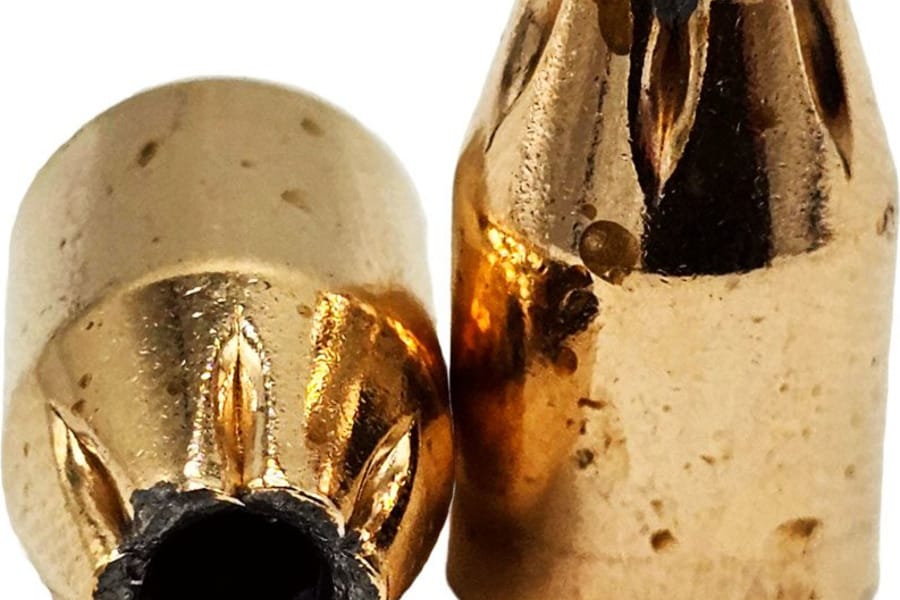
A hollow point has a cavity in the nose. When it hits soft tissue, that cavity fills, pressure builds inside it, and the bullet peels outward into a wider shape. A 9mm bullet that starts at 0.355 inches across can open to twice that.
Two things follow from that. The bullet transfers more of its energy into the target rather than carrying it out the other side, and it slows down much faster. Both matter for defensive use, and the second one matters for everyone else in the building.
Modern defensive hollow points are far better than the ones that gave the design a bad name decades ago. Bonded cores, jacket skiving and carefully tuned cavity shapes mean a good round from a reputable maker expands reliably through denim, through a car door, and out of a short barrel. Cheap hollow point is a different story, and we will come back to that.
Overpenetration is the part people skip
This is the argument that matters most and gets discussed least.
A defensive shot that passes through a threat does not stop where you would like it to. It carries on, and interior walls do almost nothing to slow a pistol bullet. If you live anywhere with neighbours, family in the next room, or an apartment wall you share, every round that exits is a round you are still responsible for.
A hollow point that expands properly sheds its energy inside the target and is far less likely to exit. That is the real reason to load it at home, ahead of any argument about stopping power. It is not that hollow point hits harder. It is that it is far more likely to stop where you aimed it.
FMJ does the opposite. It is efficient at going through things, which is exactly what you want on a paper target with a berm behind it, and exactly what you do not want at two in the morning in a hallway.
So why not carry FMJ and save money
People do, usually for one of two reasons. Either their gun will not feed hollow point reliably, or they have not thought about it.
The first reason is legitimate and worth testing rather than assuming. Some older pistols with tight feed ramps genuinely choke on wide-mouthed hollow points. If that is your gun, you have a real decision to make, and the honest answer is often to fix the gun or change the gun rather than accept ammunition that does not suit the job.
The second reason is just cost, and it is a false economy. You might fire two hundred rounds of practice ammo in a month and never fire a defensive round in your life. Paying more for the twenty rounds that actually sit in the gun is the cheapest insurance in shooting.
Rifles are a different conversation
Everything above is written with handguns in mind, because that is where the question usually comes up. Rifle ammunition follows different rules.
A .223 or 5.56 round travelling at three times the speed of a pistol bullet behaves very differently on impact. Many common rifle loads fragment or tumble, and some soft point and match hollow point designs are built for accuracy rather than expansion. Match hollow point in particular is a common source of confusion. The hollow tip on a match bullet exists to shift the centre of gravity and improve consistency, not to expand.
If you are choosing a defensive rifle load, look for a bullet designed and marketed for terminal performance, not simply one with a hole in the nose. Browse the full range in rifle ammunition and read what the maker actually claims the bullet is for.
Cheap hollow point is not the bargain it looks like
There is a category of budget hollow point that costs barely more than FMJ, and it tempts people who want to do the right thing without spending much.
The problem is that expansion is engineering, not luck. A bullet has to open reliably across a range of velocities and through common barriers, and that takes design work and quality control that the cheapest loads do not have. A hollow point that fails to expand is simply an FMJ that cost you more and often penetrates unpredictably.
If the budget is tight, the better trade is quality hollow point in a smaller quantity. Twenty rounds of something proven beats a hundred rounds of something hopeful, because you will only ever load a handful of them.
Test what you carry
Whatever you choose, put some of it through the gun before you trust it.
Run at least one full magazine, ideally two or three, of your chosen defensive load. You are checking that it feeds, fires, ejects and locks back on empty, every time, from the magazines you actually carry. You are also checking where it hits, because defensive loads often shoot to a slightly different point of impact than the cheap practice ammo you zeroed with.
This is the step almost everyone skips, and it is the one that turns a box of ammunition into something you can rely on.
A sensible way to buy
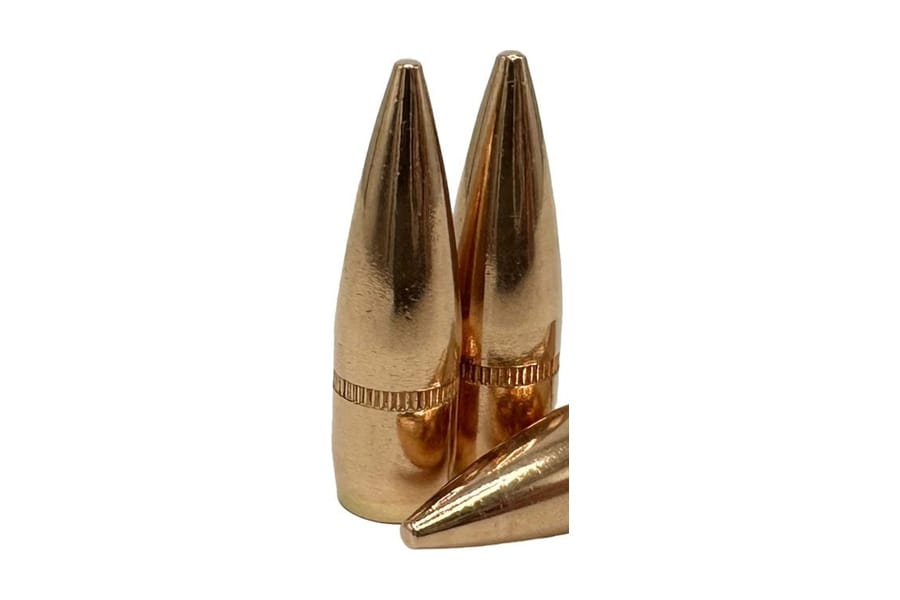
For most shooters the split looks like this.
Buy practice ammunition in bulk. FMJ in the caliber you shoot most, bought by the case rather than the box, because the per-round price drops sharply and it does not go off. Our handgun ammunition range covers the common calibers, and case quantities are where the real saving sits.
Buy defensive ammunition in small amounts from a maker you recognise. Enough to load the gun, load your spare magazines, and shoot fifty rounds to prove it works. Replace it every couple of years, or sooner if it has been chambered repeatedly, since repeatedly rechambering the same round can set the bullet back into the case.
Store both properly. Cool, dry and stable beats hot and humid every time, and ammunition kept sensibly stays good for decades.
Common questions
Is hollow point ammunition legal? In most of the United States, yes, for civilian ownership and defensive use. A small number of jurisdictions restrict it. Check your own state and city rules before ordering, because they vary and they change.
Will hollow point damage my barrel? No. It is jacketed the same way FMJ is. Unjacketed lead at high velocity is what fouls barrels, and that is a different product entirely.
Can I practise with hollow point? You can, and you should shoot some so you know it runs. Doing all your practice with it is simply expensive with no added benefit.
Does grain weight matter more than bullet type? Bullet type matters more for what happens on impact. Grain weight mostly changes velocity, recoil and point of impact. Get the type right first, then find the weight your gun shoots well.
What about +P? Higher pressure loads can help a hollow point reach expansion velocity, particularly out of a short barrel. Only use them if your firearm is rated for them, and expect more recoil and more wear.
The takeaway
FMJ and hollow point are not competitors. They are tools for two different jobs, and trying to make one do both is where people go wrong.
Practise cheap and practise often with FMJ. Load quality hollow point in the gun that might have to protect someone. Shoot enough of the second one to know it works. That is the whole system, and it costs less than most people assume.
If you are not sure what suits your firearm, get in touch. We would rather spend five minutes helping you pick correctly than sell you a case of something that does not suit the job.
Shop what you just read about
Ammunition, optics, parts and gear, shipped to all 50 states. Firearms transfer through your local dealer.
Browse the inventoryKeep reading
Ammo Prices in 2026: What to Buy Before Deer Season, What Can Wait for the Holiday Sales
Ammo costs more than it did a year ago. Several of the biggest US ammo brands raised prices in April…
Read more ›
.223 vs 5.56: The Real Difference, and Which One Your Rifle Can Shoot
A rifle stamped 5.56 shoots both .223 and 5.56; a rifle stamped .223 should not shoot 5.56. Here is why,…
Read more ›
Buckshot vs Birdshot vs Slugs: Shotgun Shells Explained
Birdshot is for birds, buckshot for defense, and slugs for range and penetration. Here is what each shotgun shell does…
Read more ›